Digital Loyalty for Fitness Studios With Class Regulars
See how fitness studios can replace paper loyalty cards with wallet-based rewards, faster class check-ins, and better retention between visits.

A boutique fitness studio does not usually have a customer problem. It has a rhythm problem. The members are there, the classes are good, and people mean to come back. But when loyalty depends on a paper card in a gym bag, that rhythm starts to slip.
That is where a digital loyalty card becomes practical. It gives studios a simple way to reward repeat visits without adding friction at the front desk or asking members to download another app they will forget after one booking.
Why paper loyalty breaks down in studios
Paper cards can work in businesses with quick, frequent transactions, but fitness studios run on a different cadence. A member may attend spin every Tuesday, reformer Pilates every Friday, and then miss a week because of work or school holidays. When they return, the loyalty card is often not part of the flow.
That leads to predictable problems:
- Members leave the card in another tote bag or at home
- Front-desk staff forget to stamp it during a busy class changeover
- Instructors know the regular by face but cannot see their reward progress
- Owners have no easy way to tell who is staying consistent and who is fading out
None of that sounds dramatic on its own. The issue is cumulative. Small missed loyalty moments turn into weaker habits, and weaker habits often turn into lower visit frequency.
Loyalty works best when it supports the routine your customers already have.
A wallet pass fits the way members already check in
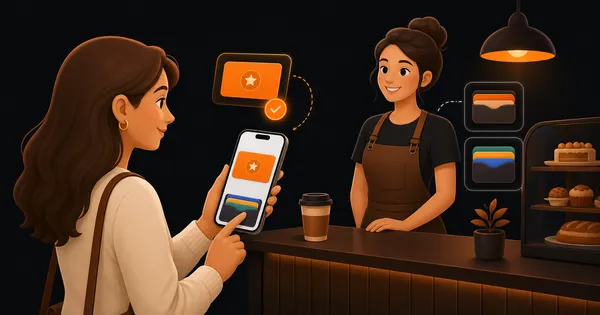
Most studio members arrive with their phone in hand. They use it to book classes or confirm the timetable while walking in from the car. A wallet-based loyalty card fits naturally because it lives in Apple Wallet or Google Pay instead of in a drawer, purse, or jacket pocket.
That matters on ordinary days, not just on launch day. Picture the 6:15 pm class rush. One member is filling a bottle at reception, another is asking if there is space in the beginner row, and the coach is trying to start on time. If the loyalty step requires finding a paper card or opening a separate app, it will be skipped. If the pass is already on the phone and staff only need to scan a QR code, it is much more likely to happen every time.
For members, that feels simple. For staff, it removes guesswork.
What loyalty looks like during a class changeover
The useful test for any studio process is whether it still works when the room is full and everyone is moving quickly.
Between the 7:00 and 8:00 sessions
Imagine a small HIIT studio with ten people leaving and twelve coming in. A coach is answering a question about shoulder pain, someone wants to buy a water bottle, and a regular member is checking whether they have earned a free guest pass yet. In a paper system, staff either pause to search for a card or promise to sort it later. Later often never comes.
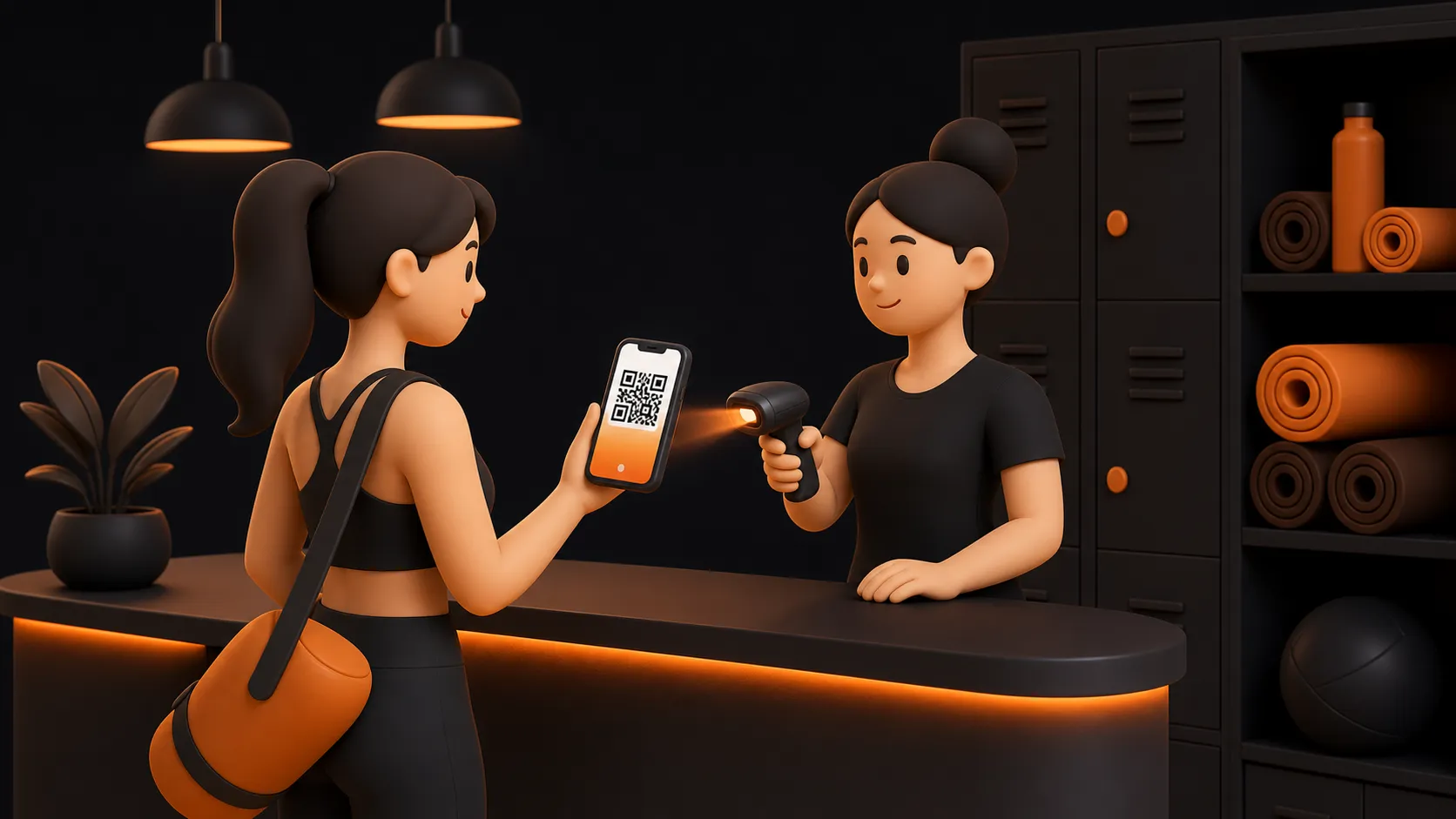
With a digital loyalty card, the member opens their pass, staff scan the QR code, and the visit is recorded on the spot. The action is short enough to fit into the handover between classes without slowing the queue.
That consistency matters more than fancy rules. A loyalty programme only helps if it is easy to run on the busiest day of the week.
Better retention between visits
Studios often feel the impact of missed visits before they can see the reason. A regular who comes three times a week drops to once. A member who always booked Saturday mornings disappears for two weeks. By the time somebody notices, the habit is already weaker.
Digital loyalty gives owners a clearer view of that pattern. The studio can identify who is close to a reward, who has slowed down, and who may need a timely nudge before they drift further away.
That supports more useful outreach, such as:
- A reminder for members who are one visit away from a reward
- A weekday offer for people who have stopped booking peak-time classes
- A message to regulars who have not checked in for the last two weeks
The point is not to send more marketing. It is to send fewer, more relevant messages.
Reward structure should match the studio model
Not every studio wants the same kind of loyalty scheme. A yoga studio may want to reward attendance consistency. A boxing gym may want to encourage off-peak sessions. A reformer Pilates brand may prefer a points approach that recognises both classes and guest visits.
The format should match how revenue already works. If most members buy packs, a reward tied to completed classes can make sense. If the business relies on drop-ins and intro offers converting into routines, loyalty can help bridge that gap.
What matters is clarity. Staff should be able to explain the reward in a sentence while someone is lacing up their shoes. Members should know exactly what they are working toward.
Is digital loyalty worth it for a small studio?
For many independent studios, yes. The return shows up in smoother check-ins, fewer missed loyalty actions, better visibility into member habits, and more chances to bring people back before their routine breaks.
That is especially important for studios where capacity is finite. An empty bike, reformer, or mat is lost revenue for that session, and filling it usually depends on steady repeat attendance.
If your business grows through familiar names showing up every week, your loyalty system should strengthen that pattern instead of relying on members to remember a card they last used twelve days ago.
If your studio runs on repeat attendance, loyalty should fit as easily as class check-in itself. Build loyalty into every class - without adding another app for members to manage.